
FORT YUMA-QUECHAN RESERVATION — With an espresso machine sputtering in the background, the barista hands a lunch order over the counter at The Coffee Shop, by Spirit Mountain Roasting Company. It’s approaching 1 p.m. and the new business brewing along the banks of the Colorado River, on the Fort Yuma-Quechan (pronounced Kwatsáan) Tribe’s land, is closing soon for the day.
The rural community outside Yuma is home to about 4,000 Quechan citizens. The last customers on a hot May day are looking to get a bite or another dose of caffeine. In a few moments there would be few other options on the reservation for finding a healthy meal.
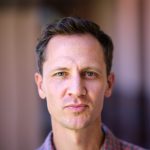
“We’re in an agricultural area and the irony is that it’s also a food desert,” says Tudor Montague, a Quechan citizen whose background in environmental science helped spur his journey as an entrepreneur.
That nutritional barrenness is fertile ground for a tendril of hope, as Tudor opened Spirit Mountain, the community’s first coffee shop, about a year ago.
Partly in Arizona and partly in California — with a few enclaves of non-tribal land, such as Winterhaven, California, interspersed between — the Quechan people have been living along the river “since time immemorial,” Tudor says.
“Coming from an Indigenous rural community, I grew up seeing the lack of opportunity and the lack of recognition for what you do,” Tudor says between sips of his own Colombian cold brew.

He’s seized an opportunity and he and his coffee shop are gaining local fame for becoming a new community hub and a place to get good joe and a healthy lunch. They offer overnight oats, yogurt cups, a breakfast sandwich, breakfast burrito, as well as a BLT and a rotating list of other sandwiches or wraps.
The most important element for a good cup of coffee is freshness, Tudor says. It’s like picking a tomato from your garden compared to buying one from the store. “The flavor bursts. Same thing with fresh coffee. It just tastes better,” he says.
“You don’t get that bitter, dark, burnt flavor that you might get in a Starbucks cup. It’s a little nutty, smooth, heavier-bodied coffee. A little smoke,” he says, describing the tasting notes of his coffee.
Spirit Mountain sells a rotating selection of in-house roasted beans from Guatemala, Colombia, Peru and elsewhere, and also offers stickers, T-shirts and mugs. He ships across the country and internationally. Phoenix’s 12 West Brewing uses Spirit Mountain coffee in their Midnight Run stout.
While the business is about roasting and brewing coffee, as well as offering food and treats — muffins, cookies, and sweet bread — baked by community member Reina Cruz, Spirit Mountain is also about a lot more.
“I want to be an example, a mentor. I want youth to see that we can build something here on the rez,” Tudor says.
He’s had help building up his business from Native FORGE, a University of Arizona-affiliated program that supports and mentors Indigenous entrepreneurs. Native FORGE seeks to close the equity gap between Indigenous and non-Indigenous business owners. Indigenous Arizonans own less than 1% of all Arizona small businesses.
Local tribal members may be initially attracted to Spirit Mountain’s chipotle cold brew or the chicken salad sandwich. Once they’re inside, Tudor says, once they read the welcome message — Kanák ak, Kaaféy kasíim! Or, Sit down, Have some coffee! — above the espresso machine in Quechan and English, “it might inspire something.”
With Spirit Mountain Roasting, Montague wants to touch the community in multiple ways: offering fresh and healthy coffee and food, attracting diners from Yuma and elsewhere, and inspiring the Quechan people. With few jobs on the reservation besides the casino, the school and health center, Montague wants Spirit Mountain to be a trailblazer for Indigenous entrepreneurs and enterprises.
His focus also extends beyond his community. He sources his beans and all of his other materials from almost exclusively Indigenous or women growers and producers. One of their slogans reads: “Indigenous from seed to cup.”
“It strengthens our story to buy from Indigenous growers. It’s just a small way I can help,” he says.
Overall, Tudor sees the project as “part of steering growth and inviting people in.”
“Hopefully this attracts more people to other businesses,” such as getting more people to Koteen’s Barber Shop that shares a roof with Spirit Mountain. The barbershop is owned by fellow Quechan Jon Koteen, who also worked with Native FORGE this year.

Measured growth
Attracting business and modeling leadership is also an objective of Native FORGE, a University of Arizona program focused on supporting Indigenous entrepreneurs within Native Nations in Arizona.
As of 2021, throughout the country there were an estimated 40,392 American Indian and Alaska Native-owned businesses, employing 243,523 people, according to a business survey conducted by the U.S. Census Bureau. In Arizona, Indigenous people own more than 4,000 businesses of the total 611,000 small businesses in the state.
Native FORGE is an offshoot of FORGE, a University of Arizona program that focuses more broadly on supporting start-up businesses and entrepreneurs from various communities. Tudor and his roasting shop are part of the program’s second cohort of Indigenous entrepreneurs.
Native FORGE’s mission is to “cultivate a thriving ecosystem that honors Indigenous heritage, promotes sustainable development, and champions economic self-determination.”
Aleshia Howell is senior program coordinator at the Office of Native American Advancement and Tribal Engagement, which works with Native FORGE. Howell said the spirit of entrepreneurship is different within Arizona’s Indigenous communities.
“They’re not looking to make a million dollars,” Howell said. “They’re trying to create opportunities for work, create wealth for future generations, to promote tribal culture, to serve people in their communities.”
Some examples Howell offered about Indigenous business endeavors include: the Pascua Yaqui Tribe hosting entrepreneur workshops and mixers for their community; Change Labs opening last year in Navajo and Hopi country; and Fort Yuma-Quechan celebrating the grand opening of the Quechan Business Development Center earlier this year.
“We are at the beginning of seeing ecosystems take shape, and it’s an exciting time to be an Indigenous entrepreneur in Arizona,” she said.
The community-focused business model championed by Native FORGE is what drew in Tudor, who now employs five people, all Quechan, at his coffee shop.
Having grown up on the Quechan reservation, after graduating high school, Tudor moved away for college. He focused on environmental studies at the University of Kansas and then returned to Arizona and worked for the Salt River Pima-Maricopa Indian Community for 15 years, focusing on wildlife management.
His time in Kansas opened up his tastes in craft brewing and coffee roasting. Time away from home also helped him realize that he could help bring back healthy eating to his community.
Tudor says that people who leave the reservation typically don’t come back. He felt it was important not only to return to his roots, but to bring what he learned with him.
When he moved back a couple years ago, he found that the general feeling was “still the same as when I was growing up.”
He described his tribal lands as having an almost island feel to it. “It’s quiet, relaxed, spacious and peaceful. There’s a slower, more relaxed pace of life there,” Tudor says.
“In my daily interactions with community members, they’re not griping about things. They’re laughing, joking. There’s typically a positive vibe in the air, despite what we’re all going through. I don’t feel a sense of depression.” But, just like any rural community, “and particularly on reservations, the poverty rate is high,” Tudor said.
And food prices in the greater Yuma area have gone up, and the “overall quality of the food isn’t good,” he says. Which is why Tudor says he wanted to “bring something really special here to the reservation, which can continue to not only serve the community here, but draw people from Yuma coming over.”
The cafe opened in June 2023, though Spirit Mountain has been roasting and selling beans since 2015.
Tudor says his community is small and word spread quickly. They’re now also serving Spirit Mountain coffee in Paradise Casino, owned by the Fort Yuma-Quechan Tribe.
He says he sees in Yuma the “potential for measured growth.” The coffee and food at Spirit Mountain would “bring some dollars into the community,” but also added that “it’s nice to have that river as a boundary.”
Tudor sees the cafe as a testing ground to eventually open a full-scale restaurant.

Brewing hope
“The most enjoyable part for me is introducing community members — like some of the elders that are used to their Folgers — to a good cup of coffee,” he says.
Once they start tasting this coffee, they can’t go back, he says.
That’s the kind of experiential, word-of-mouth advertising (the only kind of advertising available to Spirit Mountain’s budget) that builds the right kind of growth. He says that one of his priorities is modeling a grassroots, community-focused business, and you can’t do that with injections of outside capital.
“One of the basic obstacles here on the reservation is lack of business infrastructure spaces,” Tudor says. There simply aren’t very many commercial buildings to use, which is why he ended up building his own roastery, retrofitted from an old trailer. The roastery is 20 minutes down a low-traffic road from the coffee shop. In the backyard, beyond the few windbreak trees, stretches a sea of dirt fields all the way to the dust-hazed horizon and the Chocolate Mountains in the distance.
The two roasters, the packaging sealer and a few utility shelves take up all the space in the retrofitted trailer, and you can almost feel the sun beat down on the roof over your head. The space is where Tudor finds reprieve, and, as the green beans slowly take on their crisp shades of brown, he dreams up his specialty coffee concoctions, such as bourbon barrel, sweetgrass coffee or chipotle cold brew.
Doing it all from scratch has been hard, Tudor says, but has offered him invaluable insight that he’d like to be able to share with other business-minded Quechans.
“I’ve been there, I’m happy to help them, the next generation, avoid some initial mistakes,” he says.
Tudor wants to open franchises some day, planting new Spirit Mountain coffee shops across Arizona. For now, he wants to get through the year, keep honing his roasting and business skills, and make sure his fellow Quechan people have delicious coffee in the morning.
But whether it’s poured at the Paradise Casino or percolating out of your home coffee maker, Spirit Mountain is as much about creating opportunity as it is about a morning beverage, Tudor says.

Thuts Uribe, a citizen of the Quechan tribe, was born and raised on the reservation. He started drinking coffee at a young age because, he says, he looked up to his grandfather who worked on cars and was always drinking black coffee.
For the last nine years, Thuts had been working at various coffee shops throughout Yuma. He took an interest in “looking at other parts of the world to see how they make their coffee.” Now, he says — bopping between tending the till and the espresso machine — he has the opportunity to follow his passion and work in and for his own community at Spirit Mountain.
More information on Native FORGE: The 2022 cohort included five entrepreneurs of the San Carlos Apache Tribe. The 2023 cohort included four entrepreneurs of the Quechan Tribe: James Emerson of Luca Jean Moving Services; Gregg Gilbert of Constructive Building Solutions; Jon Koteen of Koteen’s Barbershop; and Tudor Montague of Spirit Mountain Roasting Company. The 2024 cohort will be announced soon.
Editor’s note: Arizona Luminaria is in the residency program at FORGE and has received mentorship support and in-kind support from this program.